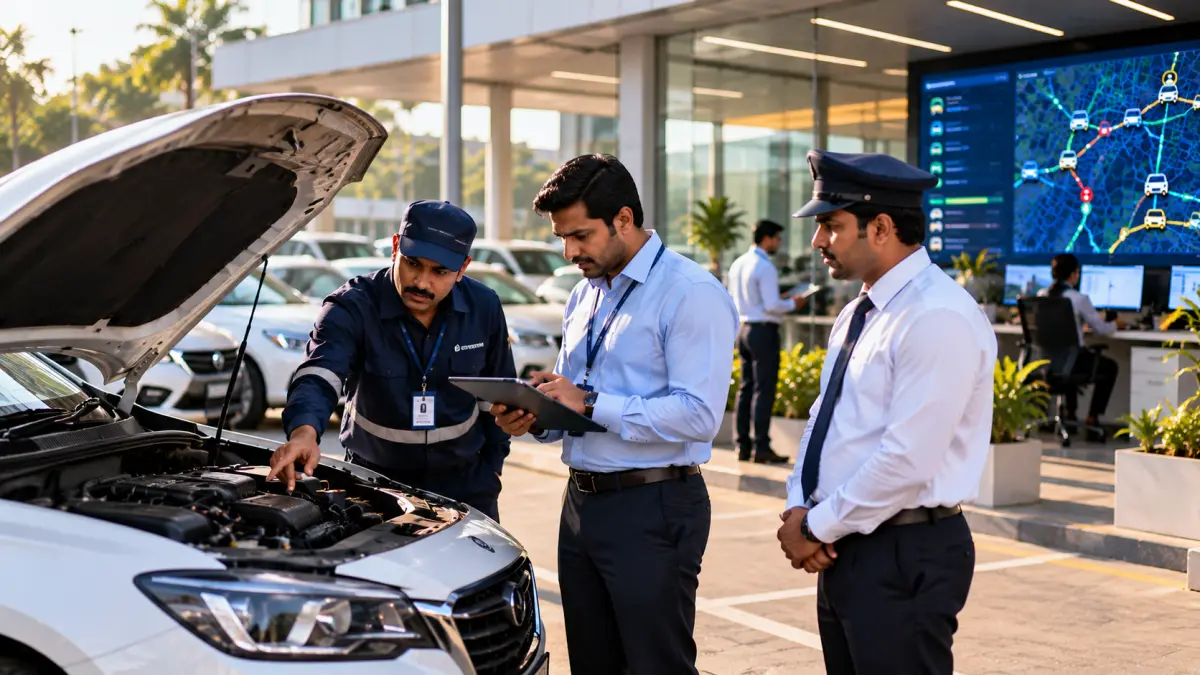
How to Plan an Efficient Corporate Employee Transportation System
Corporate employee transportation is more than arranging vehicles for employees. It involves understanding employee locations, working shifts, pickup requirements, routes, vehicle capacity, driver availability, safety and daily operational coordination.
A structured transportation system can help organizations create a more organized and predictable employee commute experience while giving transportation teams better operational visibility.

Why Corporate Transportation Requires Structured Planning
For organizations with a large employee base, transportation can become a significant daily operational activity. Employees may live across different locations, work in different shifts and require transportation at different times.
Managing these requirements manually can make transportation operations increasingly difficult as the number of employees, routes and vehicles increases.
Corporate transportation planning therefore requires a structured approach that brings together employee requirements, route planning, fleet availability, drivers, schedules, technology and operational supervision.
The objective of corporate transportation planning is to organize employee movement around the organization's operational requirements while maintaining dependable, safe and coordinated transportation operations.
Understand Employee Transportation Requirements
The first stage of transportation planning is understanding the actual requirements of the employees and the organization.
Different employees may have different office locations, residential locations, shift timings and transportation requirements. These factors need to be considered before transportation routes and vehicle allocations are finalized.
Transportation planning can therefore begin with collecting and organizing relevant employee commute information.
- Employee pickup locations
- Office locations
- Shift timings
- Transportation requirements

Create Routes Around Employee Locations
Once employee transportation requirements are understood, the next stage is route planning.
Route planning involves organizing employee pickup points and transportation paths so that vehicles can support the required commute schedules.
Organizations with employees distributed across multiple areas may require different routes, pickup zones or transportation arrangements.
Routes can be structured around the operational and geographic requirements of the organization.
Match Vehicle Capacity With Transportation Requirements
Not every transportation requirement needs the same type of vehicle.
Depending on the number of employees, route structure and transportation requirements, organizations may need different vehicle categories.
A structured fleet allows transportation teams to allocate suitable vehicles according to operational requirements.
Coordinate Drivers and Daily Transportation Operations
Vehicles alone cannot create an effective employee transportation system. Drivers and transportation operations teams are an essential part of daily service delivery.
Drivers need to understand their assigned routes, schedules and operational responsibilities. Transportation supervisors can coordinate vehicles, drivers and daily transportation requirements.
Lakshmi Fleet & Travel Services' corporate profile highlights structured recruitment, police verification for drivers and qualified supervisors as part of its safety and compliance framework.
Professional Drivers
Drivers supporting daily employee transportation operations.
Supervisors
Operational coordination and transportation supervision.
Support Team
Assistance with transportation coordination and operational requirements.
Use Technology to Improve Transportation Visibility
Technology can provide transportation teams with additional visibility into vehicle movement, routes and employee commute operations.
The corporate profile identifies Routematic as a technology platform used for end-to-end employee commute management, app-based routing, real-time GPS tracking and safety monitoring.
Build a System for Different Shift Requirements
Corporate organizations may operate across different working schedules. Employee transportation planning therefore needs to consider the timing of employee movement.
Morning, evening, night or changing shift requirements can influence vehicle allocation, route planning and driver coordination.
A transportation management approach should therefore be flexible enough to accommodate the organization's operating schedule.

Monitor Fleet Availability and Operational Capacity
Fleet capacity is another important part of corporate transportation planning.
According to the Lakshmi Fleet & Travel Services corporate profile, the company presents a fleet strength of more than 100 small cabs, more than 100 big cabs and approximately 500–600 daily trips.
A transportation provider's available fleet and operational capacity can be relevant when organizations have high-volume or multiple-route transportation requirements.
Maintain Safety and Compliance Throughout the Operation
Transportation planning should also include appropriate safety and compliance practices.
These practices can cover driver recruitment, driver verification, vehicle operations, supervision and technology-enabled monitoring.
Lakshmi Fleet & Travel Services' corporate profile identifies police verification for all drivers, a strict recruitment process, medically fit drivers aged 22–40 and qualified supervisors with graduate degrees as part of its safety and compliance approach.
Safety & Compliance Framework
What Should a Corporate Transportation Plan Include?
Organizations can use the following areas as a starting point when evaluating or planning their employee transportation operations.
Employee Data
Understand employee locations, office locations and transportation requirements.
Route Planning
Organize routes and pickup points around operational requirements.
Fleet Allocation
Match suitable vehicles with transportation requirements.
Driver Management
Establish appropriate recruitment and verification processes.
Technology
Use tracking and transportation technology to improve operational visibility.
Support
Maintain an operational support mechanism for transportation requirements.
Corporate Transportation Built Around Organized Mobility
Lakshmi Fleet & Travel Services was founded in 2012 and provides corporate transportation solutions including employee transport, custom routing, corporate shuttle transportation and airport transfers.
The company's corporate profile highlights experienced promoters, strong compliance and safety standards, a proven track record of reliability and 24×7 assistance.
Corporate Transportation Works Best as a System
Efficient employee transportation requires more than vehicles on the road. It requires coordination between employees, routes, vehicles, drivers, supervisors and technology.
Organizations can begin by understanding their employee transportation requirements, creating suitable routes, allocating appropriate vehicles and establishing structured driver and operational processes.
Technology such as app-based routing and real-time GPS tracking can provide additional visibility into transportation operations, while safety and compliance processes provide an important operational foundation.
With the right combination of people, processes, fleet and technology, corporate transportation can become a more organized part of the overall employee experience.
Planning Employee Transportation for Your Organization?
Discuss your employee transportation, custom routing, corporate shuttle or airport transfer requirements with our team.